Understanding Floor Finish Specifications and Selection
Selecting the right resilient floor finish can feel overwhelming. With dozens of products on the market, each promising durability, gloss, or ease of maintenance, it is not always clear where to start. The good news is that with a basic understanding of how finishes are formulated and how they perform, you can confidently narrow your options and select a finish that aligns with your facility’s needs.
What Is Resilient Flooring?
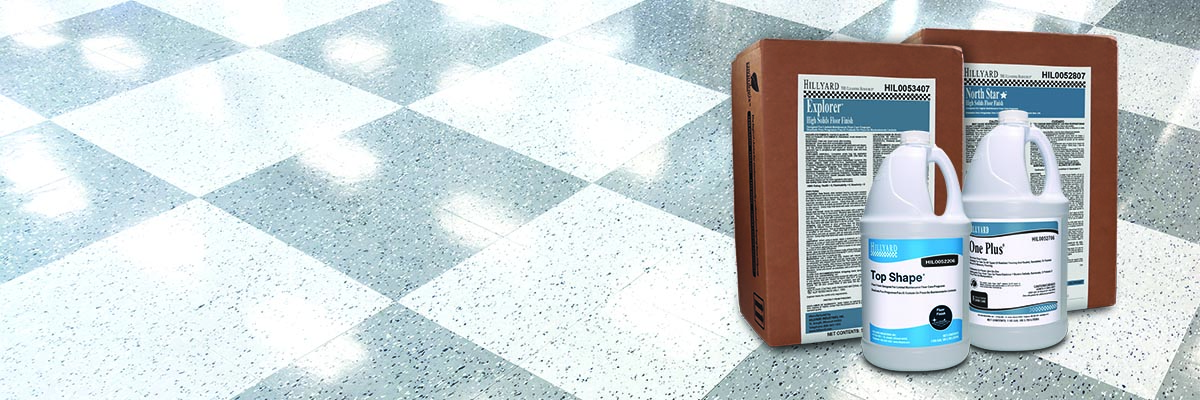
Resilient flooring refers to flooring materials designed to “give” under foot traffic and then return to their original shape. Common examples include vinyl composition tile (VCT), luxury vinyl tile (LVT), luxury vinyl plank (LVP), linoleum, and rubber flooring. These surfaces are widely used in schools, healthcare facilities, retail spaces, and commercial buildings because they are durable, cost-effective, and relatively easy to maintain.
In this article, we will review the key specifications to consider when selecting a floor finish for resilient VCT tile and provide a practical framework to help you make an informed decision for your facility.
Note: For Luxury Vinyl flooring, see this article: How to Clean and Protect Luxury Vinyl Plank Flooring
Key Specifications to Consider
Solids Content (High Solids or Low Solids?)
High Solids Floor Finishes (22% - 25% solids)
A high solids floor finish contains a higher percentage of actual finish material and less water, emulsifiers, and leveling agents. Because of this, each coat builds more film thickness.
Benefits of high solids finishes include:
- Fewer coats are required to build protection and gloss.
- Faster initial application process
- Reduced labor during initial installation
Low Solids Floor Finishes (18% - 20% solids)
Low solids floor finishes contain a higher percentage of water, emulsifiers, and leveling agents, and lay down a thinner film with each coat.
Benefits of low solids finishes include:
- More forgiving during application. With lower viscosity, these finishes will self-level better, leaving fewer streaks or mop lines.
- With lower viscosity, low-solids finishes are an excellent choice for less experienced staff.
Burnishable or Burnish-Free?
Burnishable Floor Finishes
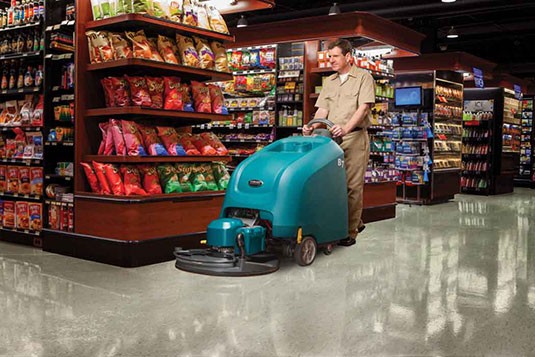
A burnishable floor finish is designed to respond to high-speed burnishing equipment. Heat and friction from burnishing restore gloss and help densify the finish film.
Benefits of burnishable finishes include:
- Higher achievable gloss levels
- Improved appearance in high-visibility areas
- Strong performance in schools and retail environments
Facilities that already own burnishing equipment or prioritize high-gloss aesthetics often prefer burnishable finishes. When selecting burnishable finishes, ensure the equipment and labor requirements are included in your maintenance budget.
Burnish-Free Floor Finishes
Burnish-free finishes are formulated to maintain appearance without the need for high-speed burnishing.
Benefits of burnish-free finishes include:
- Reduced equipment investment
- Lower labor requirements
- Simplified maintenance programs
- Consistent appearance without specialized procedures
Burnish-free finishes are ideal for facilities with limited staff, limited equipment, or a preference for simpler maintenance routines. The overall gloss level of burnish-free finishes will be lower than that of burnished floors, so be sure that this performance fits with your desired facility aesthetic.
Green Floor Finishes
Green floor finishes are formulated to meet the Green Seal GS-40 standard. This certification focuses on reducing environmental and human health impacts without sacrificing performance.
Key GS-40 considerations for floor finish include:
- Verified Performance: Tested for slip resistance, durability, soil resistance, and ease of removal on resilient flooring.
- Safer Chemistry: Free from PFAS, carcinogens, reproductive toxins, heavy metals, and other high-risk ingredients.
- Low VOC: Meets California Air Resources Board VOC limits, supporting healthier indoor air quality.
- Environmental Responsibility: Uses biodegradable ingredients where feasible and limits phosphorus to reduce environmental impact.
- Training and Instructions: Includes required training materials and clear labeling for proper dilution, use, and safety.
- Sustainable Packaging: Packaged in recyclable, refillable, or post-consumer–content containers without restricted substances.
Facilities focused on sustainability, indoor air quality, or regulatory compliance often specify GS-40–certified finishes as part of their environmental programs.
Should You Use a Sealant Before Applying the Finish?
In certain situations, applying a floor sealant before the finish is a smart approach. Sealants penetrate porous surfaces to create a uniform base, which improves finish adhesion and overall appearance. On older flooring, sealing promotes more consistent performance and can achieve higher gloss levels with fewer finish coats than unsealed surfaces.
Recommended Sealant: Hil-Tex+
Resilient Floor Finish Selection Guide
Hillyard offers a wide array of floor finishes. Use the links below to see product specifications for each option.
Burnish-Free Finishes
Burnishable Finishes
Hillyard Can Help You Choose the Right Products
Choosing the right resilient floor finish is not just about the product. It is about matching the finish to your traffic levels, maintenance capabilities, appearance goals, and sustainability requirements. Hillyard has knowledgeable experts located throughout the United States who can help you evaluate your floors and recommend the most effective solution for your facility.
Use the “I’m Interested” form on this page, and one of our representatives will contact you to help design a floor care program that fits your needs.
Frequently Asked Questions
How do I know if I need a high solids or low solids floor finish?
High solids finishes are best when you want faster build and durability with fewer coats. Low solids finishes are better when ease of use is a priority.
Is burnishing required for all resilient floor finishes?
No. Some finishes are designed to be burnished for maximum gloss, while burnish-free finishes maintain appearance without the need for high-speed equipment.
Are green floor finishes less durable than traditional finishes?
Not necessarily. GS-40–certified floor finishes must meet durability standards while also reducing environmental and health impacts.