How to Use Quat Sanitizer Test Strips
Why Sanitizer Concentration Matters
In foodservice, healthcare, and facility cleaning environments, using a sanitizer is not enough. It must be used at the correct concentration to be effective. If the solution is too weak, it will not properly reduce bacteria. If it is too strong, it can leave residue, create safety concerns, and waste product.
That is why verifying sanitizer concentration is a critical part of any cleaning program. Quat test strips provide a fast and reliable way to confirm that your solution is mixed correctly and performing as intended.
What Is a Quat Sanitizer?
A quat sanitizer is a cleaning solution that uses quaternary ammonium compounds as its active ingredient. These compounds are positively charged molecules that attach to negatively charged bacteria cell walls. Once attached, they disrupt the cell membrane and cause the microorganism to break down and die.
Quat sanitizers are widely used because they are effective, stable, and generally safe for use on food contact surfaces when diluted properly.
Step-by-Step: How to Use Quat Test Strips
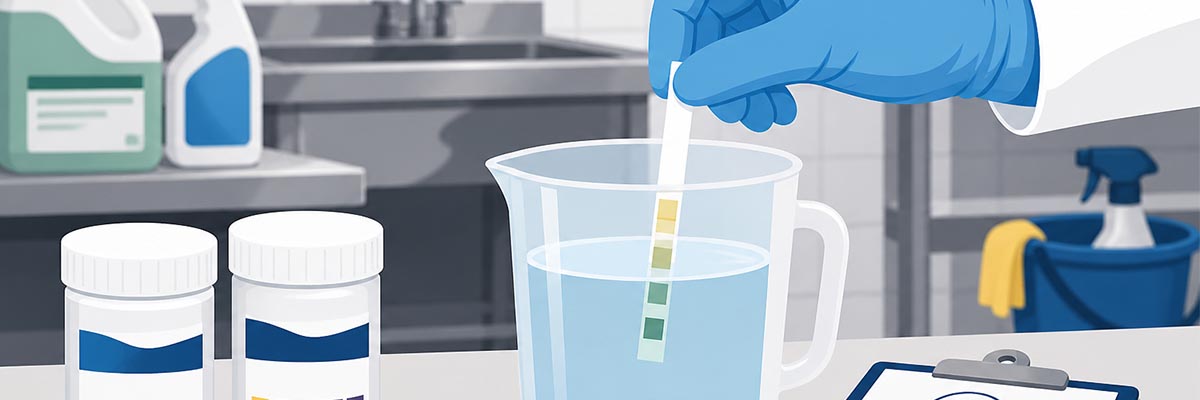
Using quat test strips correctly ensures that your sanitizer is within the proper parts per million range. Follow this process for accurate results using HIL31006 QT-10 Test Strips:
- Dispense at least one quart of Arsenal Sanitizer solution into a clean, dry container.
- Make sure the solution is at room temperature before testing.
- Dip the test strip into the liquid solution for 10 seconds, following the directions on the test strip container.
- Do not test foam. Always test the liquid itself to avoid inaccurate readings.
- Compare the strip color to the chart provided with the test strips immediately after removing the strip from the solution.
- For typical quat sanitizers, the reading should fall between 150 and 200 ppm.
This process ensures that your sanitizer is properly diluted and compliant with label requirements.
Choosing the Right Test Strips
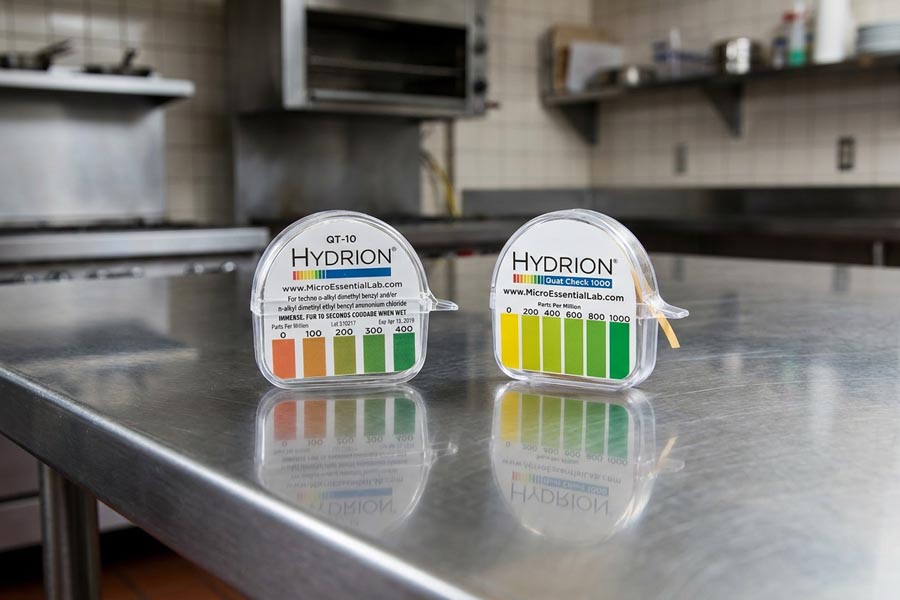
Different applications require different testing ranges. Using the correct strip ensures accurate verification:
- HIL31006 - Quat Test Strips, QT-10 (0 to 400 ppm) are ideal for standard sanitizer verification.
- HIL31032 - Quat Test Strips (0 to 1000 ppm) are used for higher concentration disinfectants.
Always match the test strip range to the expected concentration of your solution.
Testing Disinfectants with Higher Concentrations
Some disinfectants operate at much higher quat concentrations than sanitizers. Products like Re-Juv-Nal, Q.T. Plus, and Vindicator+ typically reach around 850 ppm when diluted correctly.
To verify these solutions, use quat test strips with a 0 to 1000 ppm range. The expected reading should fall between 800 and 1000 ppm. Using a lower range strip in this scenario will not provide an accurate result.
Hillyard Can Help You Build a Better Sanitizing Program
Proper dilution, verification, and training are key to maintaining effective cleaning programs. Hillyard provides expertise, products, and support to help ensure your team is using the right procedures every time.
Our specialists work with facilities across the United States to improve outcomes, reduce waste, and simplify compliance. Use the “I’m Interested” form at the bottom of this page to connect with a Hillyard expert and strengthen your sanitizing program.
Frequently Asked Questions
How often should I test my sanitizer solution?
Sanitizer solutions should be tested at the start of each shift and whenever a new batch is mixed. High-use environments may require more frequent checks throughout the day.
Can I test sanitizer directly in a sink or bucket?
It is best practice to test in a clean container with fresh solution. Testing in a sink or bucket may introduce contamination or inconsistent readings.
Why does foam affect the test result?
Foam can trap air and dilute the contact between the test strip and the solution. This can lead to inaccurate readings, which is why only the liquid portion should be tested.