Pressure Washing Best Practices for Facility Cleaning
Pressure washing can make many facility cleaning tasks faster and more efficient. Sidewalks, loading areas, building exteriors, service areas, equipment, and other heavily soiled surfaces can often be cleaned more effectively with the right pressure washing equipment and technique.
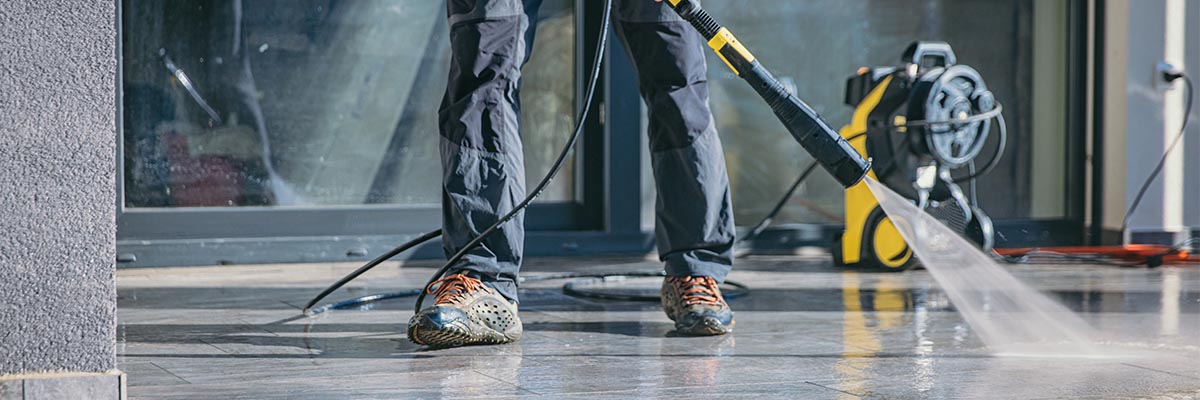
Good results depend on more than choosing a machine with a high-pressure rating. Water pressure, water flow, nozzle selection, operator technique, and surface type all influence cleaning performance. Understanding how these factors work together can improve efficiency while reducing the chance of surface damage.
Understand PSI and GPM
Two important pressure washer specifications are PSI and GPM.
PSI, or pounds per square inch, measures the force of the water hitting the surface. Higher PSI can be useful when the main challenge is breaking the bond between stubborn soil and a durable surface.
GPM, or gallons per minute, measures water flow. Higher GPM is especially important when productivity and rinsing are the priority because greater water volume helps carry loosened soil away and clean larger areas more efficiently.
Neither specification should be considered by itself. The best combination depends on what you are cleaning, how heavily soiled it is, and how quickly the work needs to be completed.
Prepare the Area and Equipment
Before pressure washing, inspect the work area and identify surfaces or objects that high pressure could damage. Avoid directing high-pressure spray at windows, electrical components, damaged materials, or other sensitive areas.
Inspect hoses, the spray gun, fittings, and connections before use, and make sure the available water supply can support the machine. If you are uncertain how a surface will respond, test a small, less visible area first.
Also consider where the wash water will go. Pressure washing can move dirt, oil, and other contaminants away from the cleaning area, so follow facility procedures and applicable requirements for managing runoff.
Use the Right Pressure Washing Technique
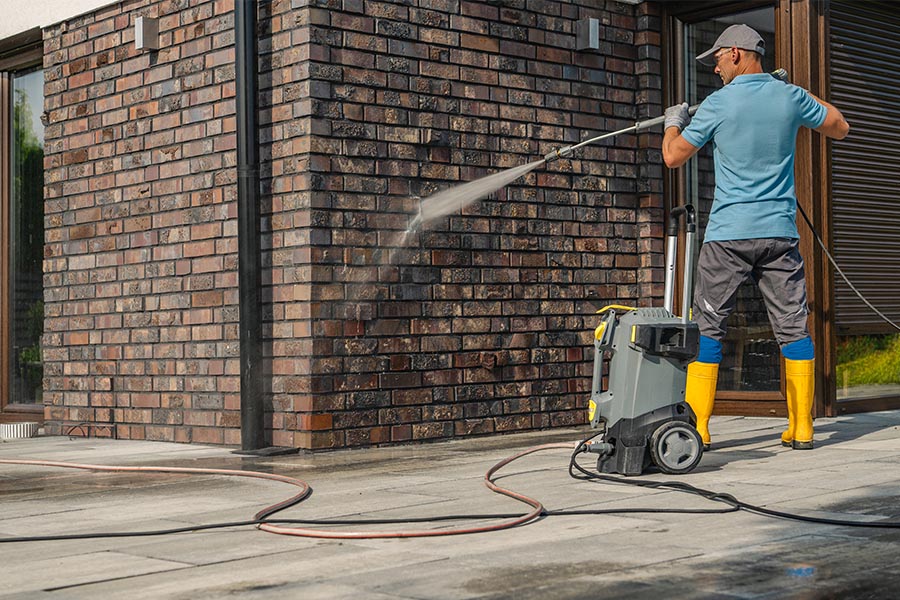
Start with the nozzle several feet from the surface and gradually move closer until you achieve the desired cleaning effect. This reduces the chance of applying more pressure than the surface can tolerate.
Grip the spray wand with both hands and direct the stream at about a 45-degree angle to the surface. This helps move loosened soil away instead of driving it into the material.
Keep the spray moving. Holding the stream in one place too long can gouge wood, damage coatings, dent softer materials, or leave visible marks. Work in manageable sections, and when cleaning vertical surfaces, generally work from top to bottom.
Nozzle selection also affects performance. A 25-degree nozzle produces a relatively wide fan pattern suited to many general cleaning applications. It can also be used like a water broom to move debris from walkways and similar surfaces. Narrower spray patterns concentrate more force in a smaller area and should be used with greater care.
Pressure washing also has inherent hazards. Personnel should be properly trained before operating the equipment and should understand the risks created by high-pressure water, wet surfaces, and nearby electrical sources. Always follow the manufacturer's operating instructions, safety precautions, and recommended personal protective equipment.
Match the Equipment to the Facility
Hillyard offers a broad range of pressure washing equipment from Karcher and Tennant for facility cleaning applications. The assortment includes gasoline-powered and corded electric equipment, with pressure ratings from approximately 1,000 to 5,000 PSI and a variety of flow rates.
Different configurations address different facility needs. Portable pressure washers provide flexibility when cleaning in multiple locations. Wall-mounted units can be practical for recurring cleaning in a dedicated area. Roll-cage and heavier-duty mobile configurations are designed for more demanding environments, while larger mobile systems can support extensive outdoor cleaning work.
Hillyard also offers rotary surface cleaners and related equipment for large flat surfaces. A surface cleaner can improve consistency and productivity on concrete, sidewalks, entrances, and similar areas by cleaning a wider path than a conventional spray wand.
Explore Hillyard's Pressure Washer Lines
Get Help Choosing the Right Equipment
Effective pressure washing combines appropriate equipment with good operating technique. Understanding PSI, GPM, nozzle selection, and proper spray technique can improve cleaning results, but facility requirements vary.
Use the form below to tell us about the surfaces you clean, the size of the area, and how you plan to use the equipment. A Hillyard representative can help you identify a pressure washer, surface cleaner, or related equipment suited to your facility.